Major sources of radiation are nuclear
reactors and associated facilities, medical and industrial x-ray and
radioisotope facilities, charged-particle accelerators, and cosmic rays. Types
of radiation are directly ionizing and indirectly ionizing, such as neutrons,
gamma rays, and x-rays, etc. In most instances, protection of human life is the
goal of radiation shielding. In other instances, protection may be required for
structural materials which would otherwise be exposed to high-intensity
radiation, or for radiation-sensitive materials such as photographic film and
certain electronic components.
Gamma-ray and x-ray photons lose energy
principally by some types of interactions: photoemission and pair production.
Neutrons lose energy in shields by elastic or inelastic scattering. Elastic
scattering is more effective with shield materials of low atomic mass, notably
hydrogenous materials, but both processes are important, and an efficient
neutron shield is made of materials of both high and low atomic mass.
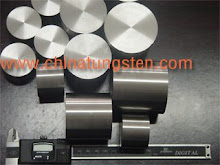
Tungsten material could be used for radiation
protection as its high density with excellent radiation absorption ability. For
more details, you could visit tungsten radiation shielding for X-rays.


没有评论:
发表评论